Liquid Silicone Rubber
(LSR) Flow
Complex geometry at scale with precision tolerance control. Net-shape production for demanding applications.
Get Quote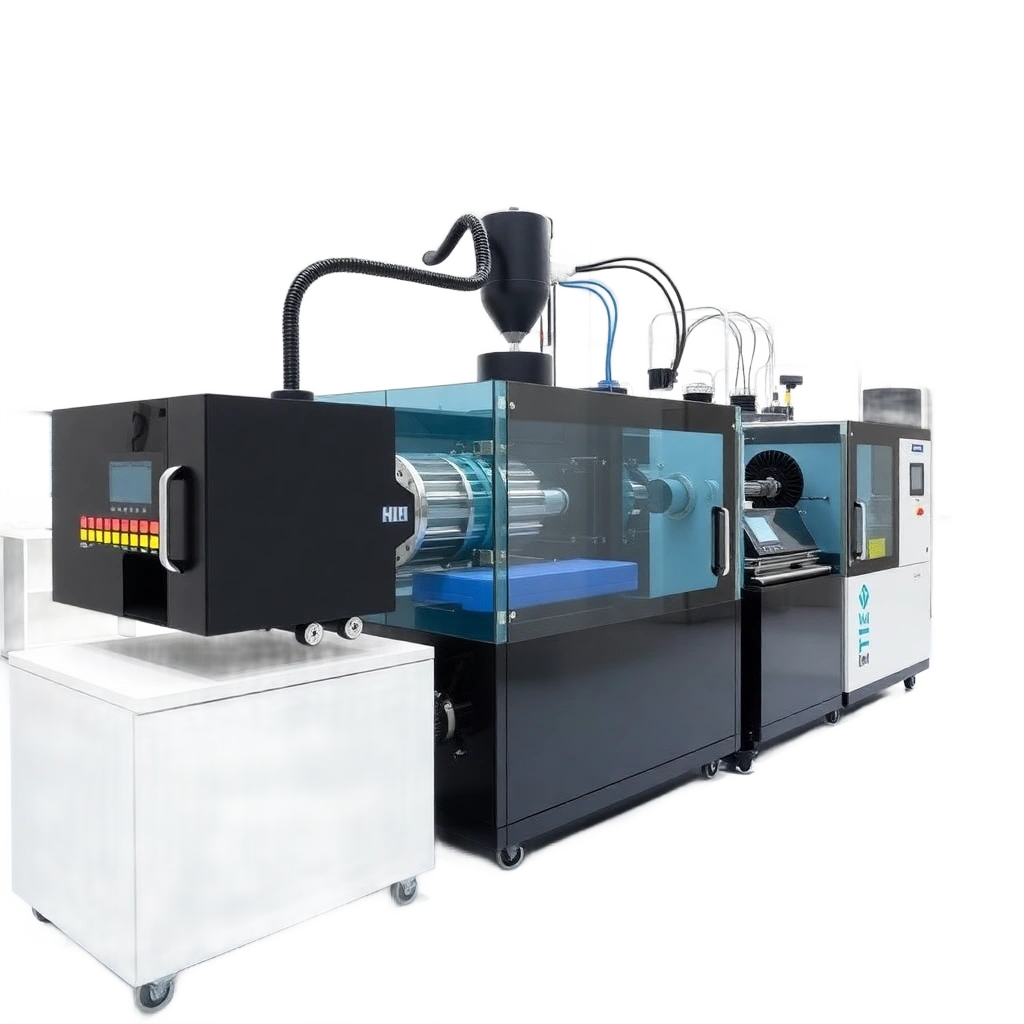
LSR Process Overview
Follows the proven injection moulding framework with elastomer-specific adaptations for thermal curing, flash control, and material biocompatibility.
Material Storage
Two-part liquid silicone stored separately in temperature-controlled drums. Part A and Part B maintained at optimal viscosity.
Metering & Mixing
Precision metering pumps deliver exact 1:1 ratio. Static or dynamic mixing ensures homogeneous material without air entrapment.
Injection
Mixed material injected into heated mold cavities through cold runner systems. Low pressure prevents material degradation.
Heated Cure
Rapid vulcanization in heated mold at 150-200°C. Platinum catalyst enables fast, complete cross-linking without peroxides.
Demoulding
Automated part ejection or robotic extraction. Parts fully cured and ready for use immediately after demoulding.
Quality Control
Automated vision inspection, dimensional verification, and material testing ensure every part meets specifications.
High-Consistency Applications
LSR moulding excels in applications requiring exceptional consistency, biocompatibility, and performance.
Medical Devices
Biocompatible components for implants, catheters, and surgical instruments requiring USP Class VI certification.
- • Implantable devices
- • Drug delivery systems
- • Surgical seals
Automotive
High-performance seals and gaskets for demanding automotive environments.
- • Engine seals
- • Sensor housings
- • Vibration dampeners
Electronics
Precision components for consumer electronics and telecommunications.
- • Keypads & buttons
- • Protective seals
- • Optical components
Benefits of LSR
Comparing LSR to traditional elements and showcase the choice of LSR over other rubbers often hinges on its superior performance in extreme environments and its compatibility with high-speed automated processing.
| Feature | Liquid Silicone Rubber (LSR) | High Consistency Rubber (HCR) | Thermoplastic Elastomers (TPE) |
|---|---|---|---|
| Curing Method | Pure Platinum-catalyzed (No by-products) | Standard Peroxide or Platinum | Thermal Non-curing (Melting/Cooling) |
| Service Temp | Resilient -60°C to 300°C | Stable -50°C to 250°C | Limited Generally < 120°C |
| Processing | Precision High-speed injection moulding | Manual Extrusion/Compression | Conventional Standard injection moulding |
| Biocompatibility | Elite Extremely high (USP Class VI) | Medical High | Variable Variable |
Frequently Asked Questions
What is LSR?
Liquid Silicone Rubber is a high-purity platinum-cured elastomer that maintains its mechanical properties across extreme temperatures. It is preferred for complex geometries where durability and chemical resistance are critical.
Why are LSR molds heated?
Unlike thermoplastics that cool to solidify, LSR is a thermosetting material. The mold is heated to trigger a cross-linking chemical reaction (curing) that transforms the liquid into a solid, durable part.
Can LSR be produced in cleanrooms?
Yes. Due to its inert nature and low-outgassing properties, LSR is ideal for Class 10k or 100k cleanroom manufacturing, meeting the strict purity standards required for medical and food-grade applications.